Ring or C-Ring Wrapper: Which Fits Your Coil Line?
Choosing a wrapper by machine name can lock you into the wrong loading path and layout for years. This guide compares ring vs. C-ring mechanisms on access, guarding, and changeover — so the mechanism follows your material flow.
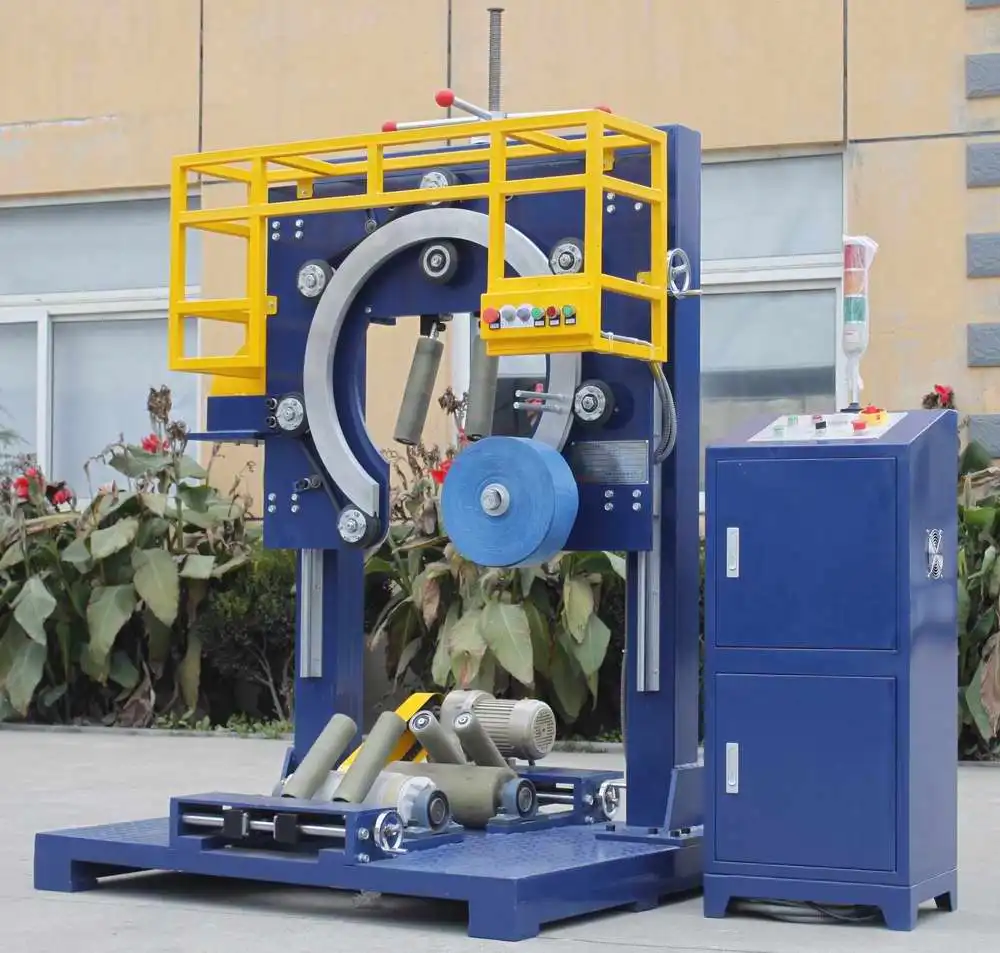
Ring Wrapper vs. C-Ring Wrapper: How to Choose the Wrapping Mechan
Ring Wrapper vs. C-Ring Wrapper: How to Choose the Wrapping Mechanism
Ring and C-ring wrappers both rotate wrapping material around a coil, but they are not interchangeable. The difference affects loading access, coil diameter range, floor layout, and how the coil enters and leaves the station on an automatic coil packing line.
This guide helps engineers and buyers choose the wrapping mechanism from the product population and material flow.
| Selection factor | Ring wrapper | C-ring wrapper |
|---|---|---|
| Loading path | Coil passes through a closed ring | Coil can be loaded from the side or through the opening |
| Coil diameter | Ring opening must match the maximum outer diameter | C-ring opening must match the maximum outer diameter |
| Layout | Straight or defined pass-through flow | Shorter transfer and easier side access |
| Guarding | Compact closed path | Open path requires a different guarding boundary |
| Maintenance | May be more compact | Larger access area possible |
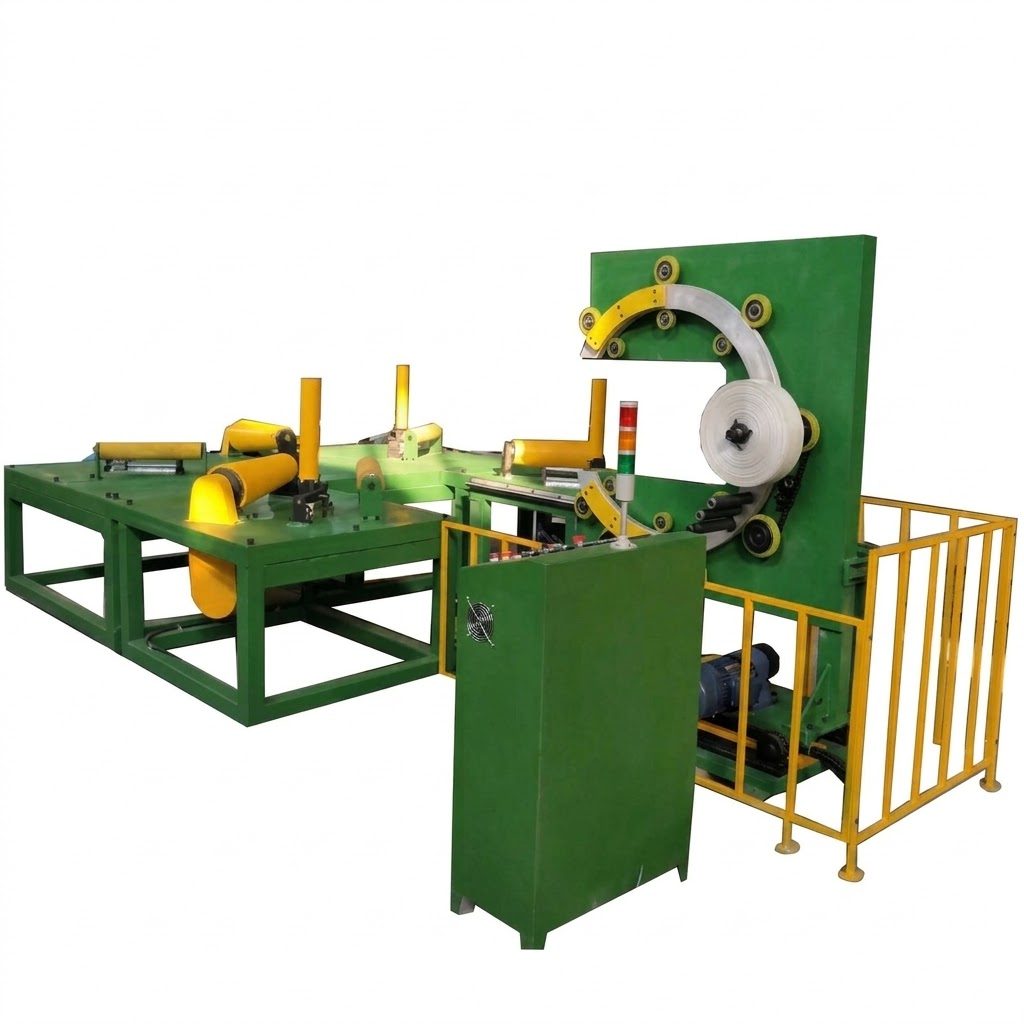
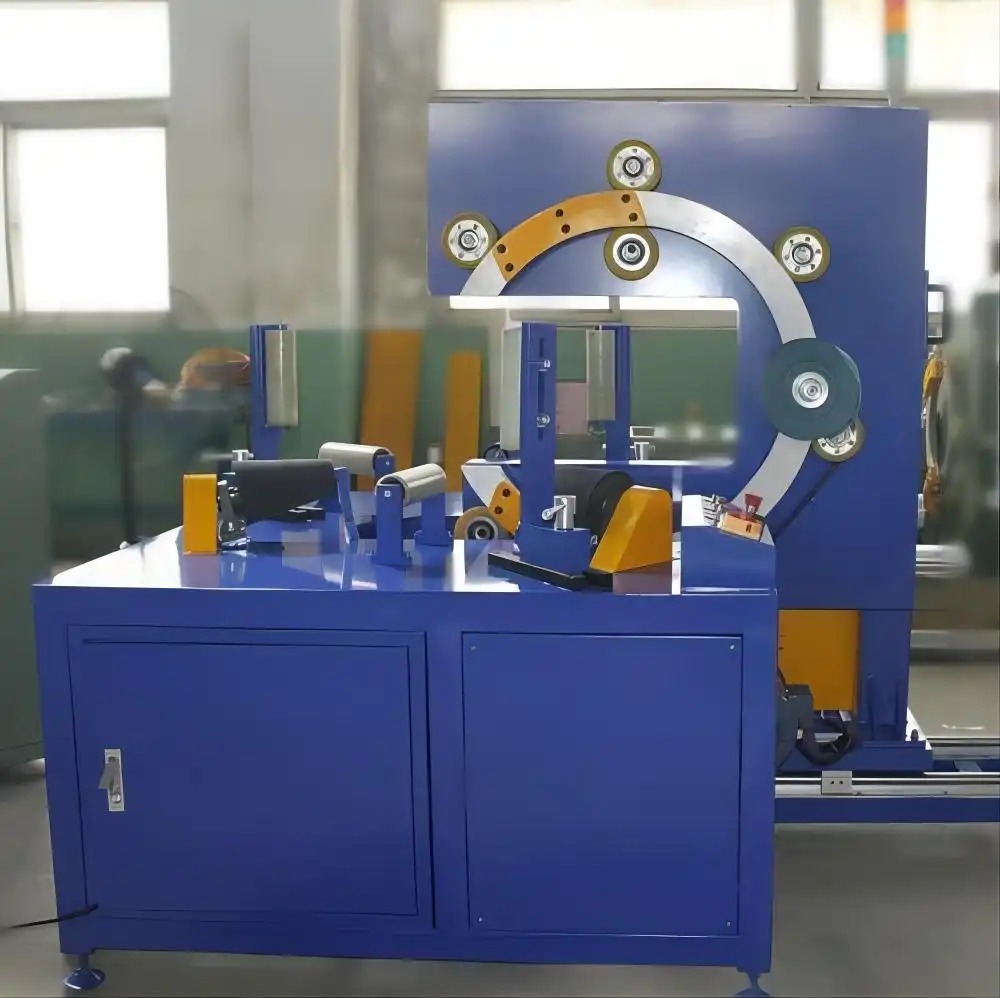
The image shows a C-ring wrapper. The opening changes how the coil is loaded and how the mechanism is guarded, so the selection must follow the material flow, not the machine name.
Understand the Two Mechanisms
A full-ring wrapper has a closed ring that rotates around the coil. The coil usually enters and exits through the ring, so the line must provide enough clearance and a straight or defined transfer path.
A C-ring wrapper has a ring with an opening, allowing the coil to be loaded from the side or through the opening without passing through a closed loop. This can simplify access and reduce transfer length.
Match the Ring Opening to the Coil
The critical dimensions are the coil outer diameter and the ring or C-ring opening. The mechanism must fit the actual maximum coil without touching the wrapping material or the coil surface.
Confirm the ring speed, film path, and positioning method against the coil population, not only the brochure range.

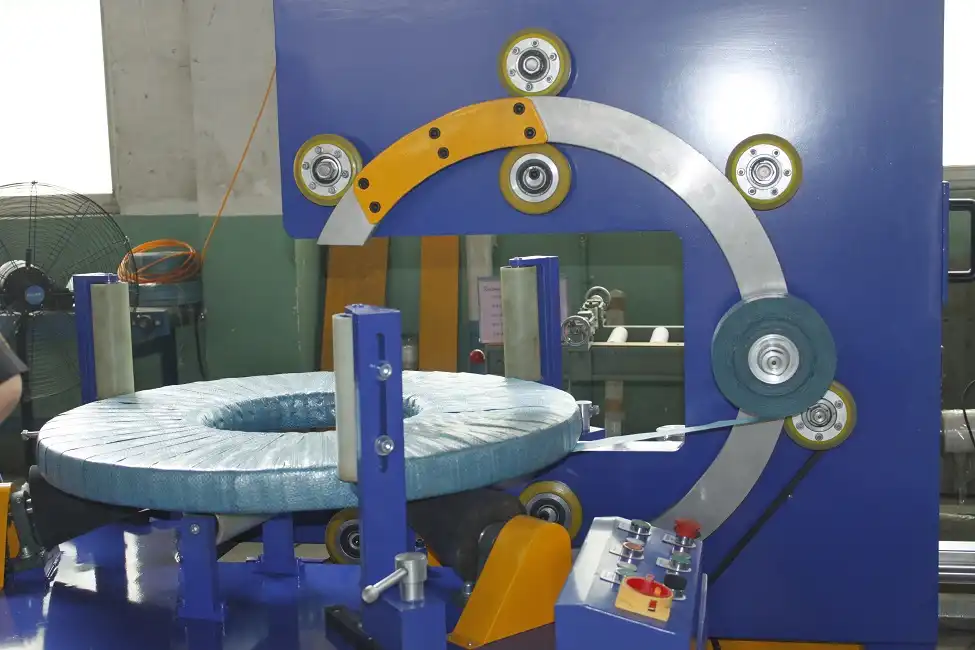
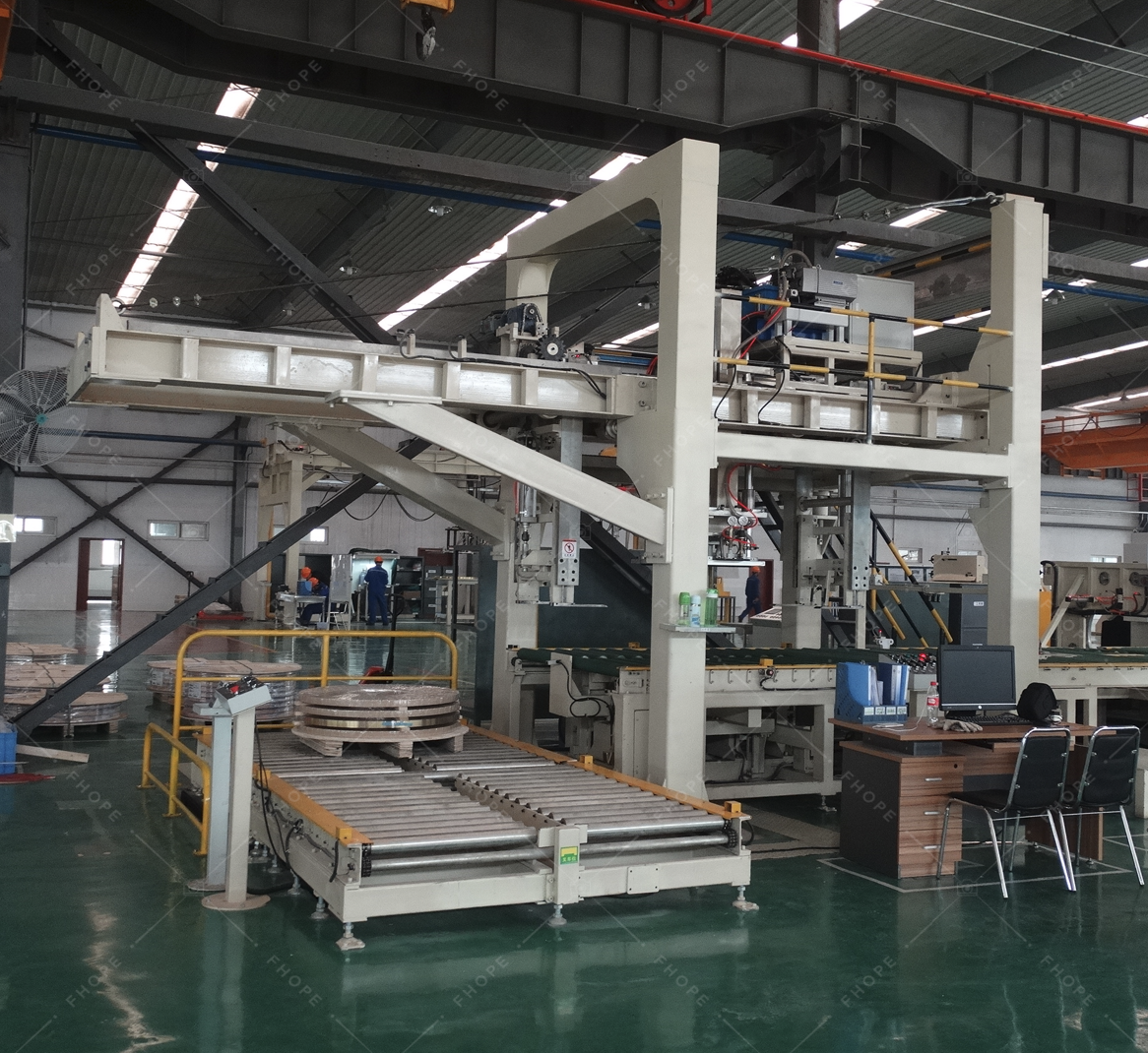
The image shows aluminum coil packaging machinery. The ring opening and positioning method must match the actual coil population, including the maximum diameter and the way the coil is presented.
Consider Loading and Transfer
If the coil is loaded by crane or from the side, a C-ring may be easier to access. If the coil moves through the line on a conveyor, a full-ring wrapper can create a simpler pass-through flow.
The decision should follow the material flow, including buffering and the ability to remove a blocked coil.
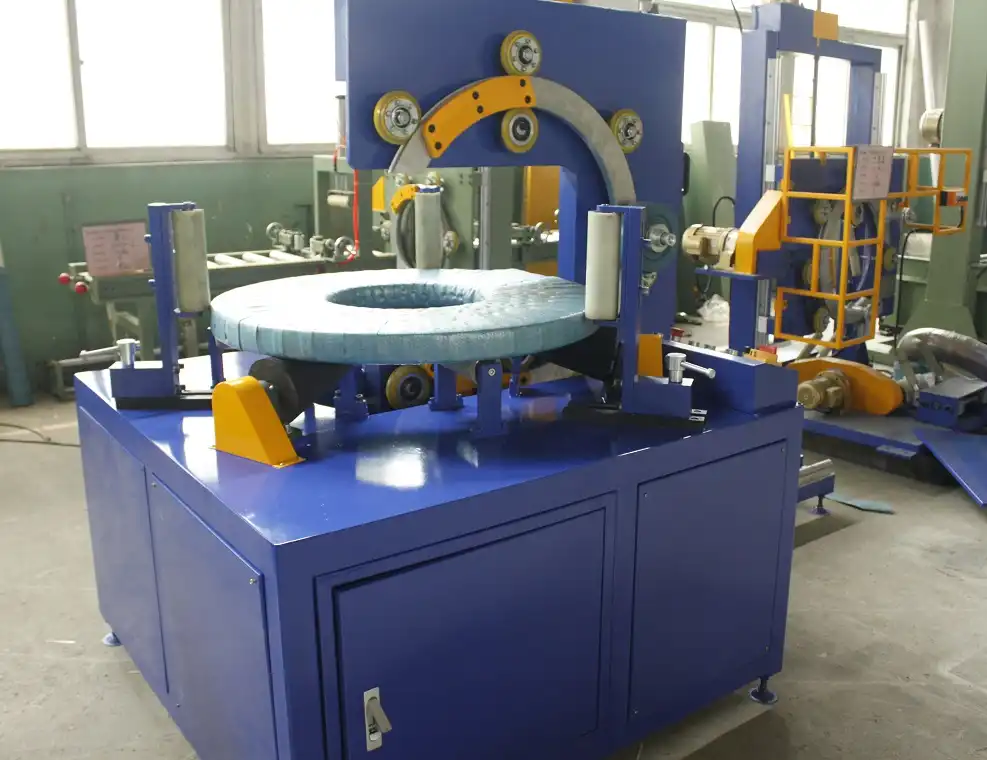
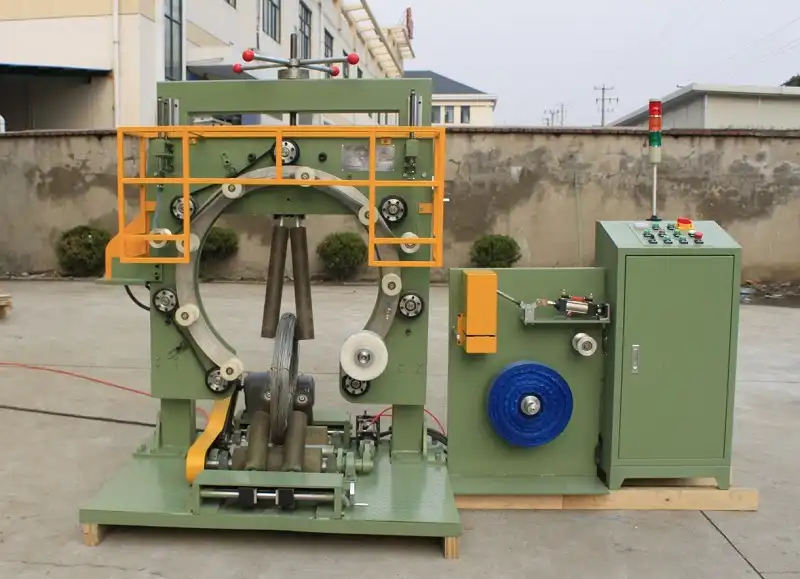
The image shows a horizontal hose coil packing machine. The same loading and transfer logic applies to coil lines: the mechanism must fit how the coil enters, passes through, and leaves the station.
Compare Maintenance and Guarding
A full-ring mechanism may be more compact but can make maintenance access harder. A C-ring opening can create a larger access area but may need different guarding because of the open path.
The safety boundary must be reviewed for both configurations with the actual loading and replenishment tasks.
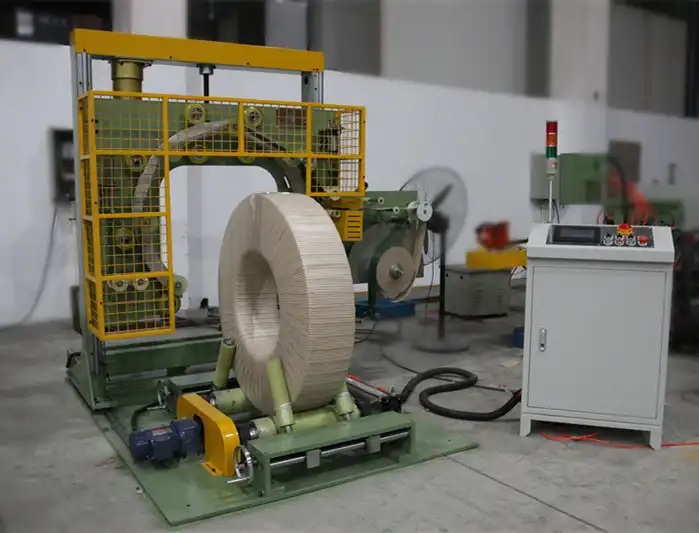
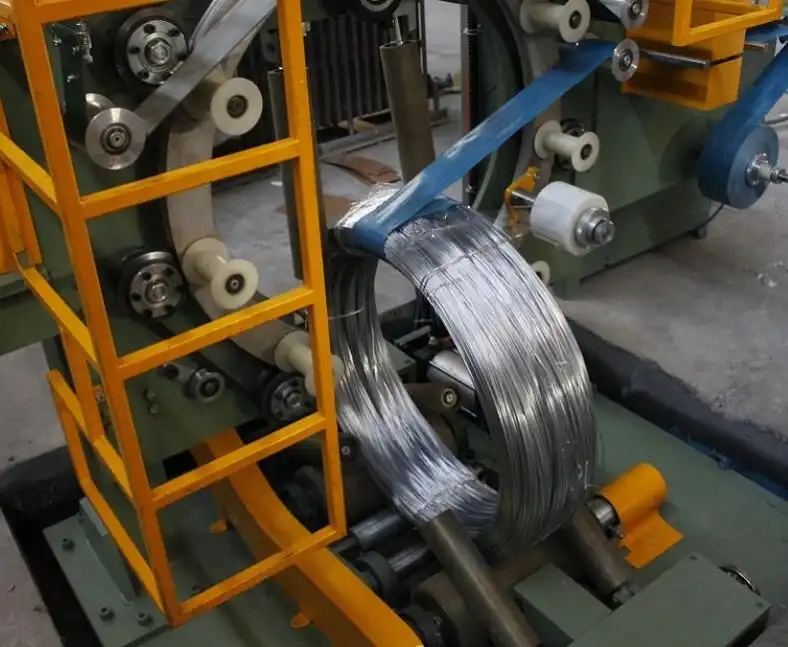
The image shows a coil wrapping machine for wire. Maintenance access, guarding, and the route for material replenishment are part of the mechanism selection, not separate details.
Test Changeover and Recovery
Both mechanisms should be tested on the widest and narrowest coils, on film changes, and on the route for a blocked coil. The best mechanism is the one that keeps normal and exceptional flow testable.
A Practical Next Step
List the coil population, loading method, floor space, and access requirements. Compare ring and C-ring options against those boundaries, then demonstrate the selected mechanism with representative coils during acceptance.
Use the same boundaries to compare the automatic coil packing line configuration before procurement.
Watch a high-speed coil wrap packaging machine in operation:

Visual Details
Click to enlarge
Click to enlarge
Click to enlarge
Click to enlarge
Watch How It Works
Discover how our automated packaging solutions optimize your production line efficiency. This video demonstrates the seamless operation designed for maximum protection.
Trusted by Steel Mills & Industry Leaders
Global manufacturers rely on FHOPE heavy duty packaging equipment


Ready to optimize your packaging line?
Get a custom quote with ROI analysis. Our engineers respond within 24 hours.
- Free layout design
- Global installation support
- 2-year warranty included
Your information is secure and will never be shared.
Related Machines
Steel Coil Packaging line
View Details →
Vertical coil packaging line
View Details →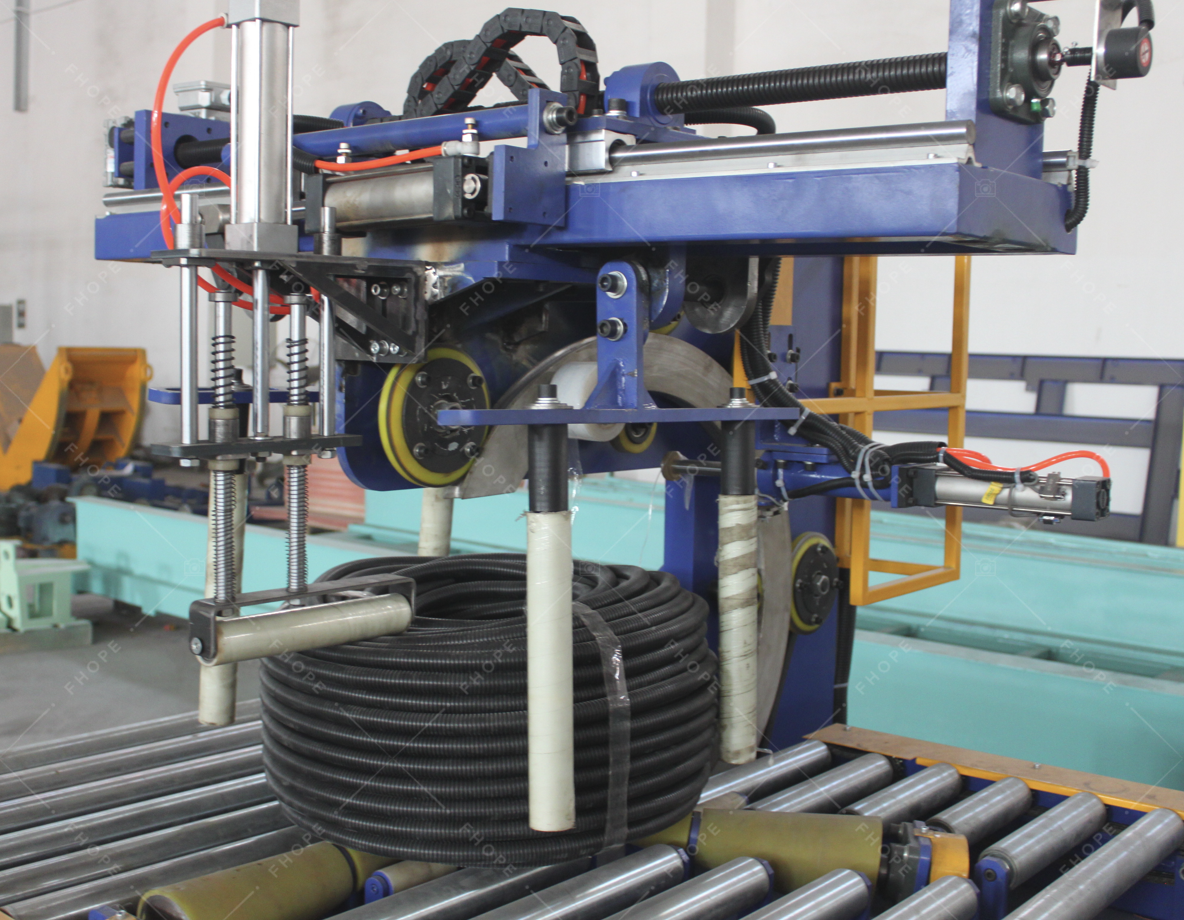
Hose Coil Packaging line
View Details →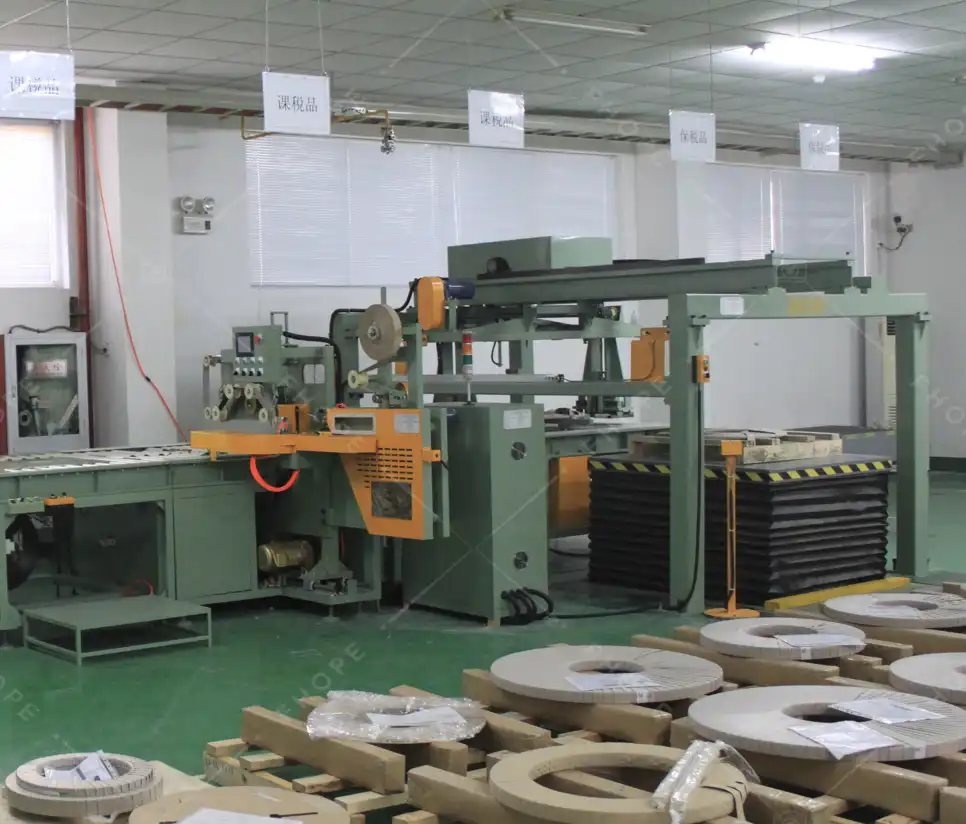
Copper Coil Packaging line
View Details →
Wire Coil Packaging line
View Details →
Panel Packaging line
View Details →
Pipe Bagging Machine
View Details →
Aluminum profile packing line
View Details →
FHOPE Automatic pipe tube bundling&strapping line
View Details →
Automatic pipe tube bundling & strapping line
View Details →
Automatic steel tube strapping machine
View Details →
FHOPE Automatic steel tube packing machine
View Details →
Automatic plastic Pipe strapping packing line
View Details →
Automatic PPR/PVC Pipe bagging line
View Details →
Platsic pipe bag packing machine
View Details →
Tyre Packing Machine FPT-200
View Details →
Tyre Packing Machine FPT-300
View Details →
Tyre Packing Machine FPT-400
View Details →
Cable Coil Packing Machine-FPCA100
View Details →